Couples changing habits together. Why he and she rarely move at the same speed


When a couple changes habits together, the bigger partner usually sees the scales move sooner, because a larger body needs more energy each day, and that says nothing about who is trying harder. The fix is simple. Share the plan, not the plate size.
A coach at the club looks closely at where you stand and offers the best guidance.
Book your free assessmentIn this article
The shared dinner problem
Most couples in Kirk Ella or Anlaby eat the same meal at the same table. That is lovely, and it is also where things go wrong. If both of you serve yourselves the same amount of pasta, the smaller partner is eating closer to what the larger partner needs. He loses a little. She loses nothing and wonders what she is doing wrong. Nobody is doing anything wrong. The portions simply do not match the bodies eating them.
Why energy needs differ
The UK figures for daily energy come from the SACN report on dietary reference values for energy. It shows that needs rise with body size and activity, and it warns that these averages describe groups, not individuals. A tall man who walks to work and a petite woman who drives up the A164 will not burn the same amount, even on an identical day. That is biology, not willpower.
A fair plan for 2
- Same recipe, different serving spoon. Cook once, then fill half of each plate with vegetables and adjust the starchy part to the person.
- Protein for both. Each plate gets its own share of fish, eggs, beans or chicken. Our guide on how much protein you need each day helps you size it.
- Fruit and veg as the common ground. The NHS guide to what counts towards your 5 A Day works the same for everyone, so make that the part you do together.
- Separate scorecards. Track your own waist and your own energy. Comparing 2 different bodies on 1 set of scales only breeds frustration.
When the gap feels unfair
Picture a couple from Swanland. After 6 weeks he is down 4kg, about 9lb, and she is down 2kg, about 4lb. If he started at 100kg and she at 65kg, they have each lost roughly 3 to 4 percent of their weight. Seen that way, they are neck and neck. Hormones, sleep and the menstrual cycle can also hide progress for a while, which our article on period and weight changes explains.
What partners can do for each other
Support beats competition. Agree on a shopping list, keep treats out of sight, and walk together after dinner. If one of you loses interest, the other carries the habit for a week. Couples who treat it as a team project tend to keep going longer than those who race.
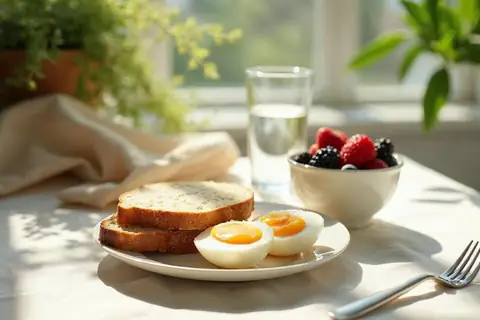
Breakfast side by side
At Willerby Nutrition, each member sets their own goals and has their own daily follow-up from coaches trained in nutrition, so a couple never has to compare. The club holds a 5 out of 5 rating on Google from 7 reviews. Book a free assessment for each of you and you will both start from your own numbers. This is general guidance, so if either of you has a medical condition, speak to your GP first.
Your own weight loss curve
Type in your profile and the line redraws immediately.
At the middle pace, 8 kg comes off in about 11 weeks. At the gentlest pace you are looking at about 4 months.
The usual guide for weight loss that lasts is between 500 g and 1 kg per week, which forms the best band on the chart. Keep exceeding 1 kg per week and the body burns muscle nearly as much as fat. That is the striped band.
A rough projection only. Everyone follows their own path and results differ. Your device does the sums and nothing is stored or sent. At 65 or older, see your doctor first.
The way this curve is worked out
The zone tops out at 500 g every week, the gentlest pace, and bottoms out at 1 kg every week, the level where the risk starts.
Early weeks go quicker, largely because of water, and then things level off. After 40, the typical curve flattens gradually as metabolism slows. For similar effort, men tend to shed weight slightly sooner than women.
The journey curve includes flat spells lasting several days and slight regains, just like everyday life. It cannot tell you how yours will go.
These tips are general ones. They do not stand in for medical advice.
Further reading

For help from day to day, take a look at the healthy eating programme.