Healthy fats and weight loss, how much oil, nuts and fish fit into a lighter week

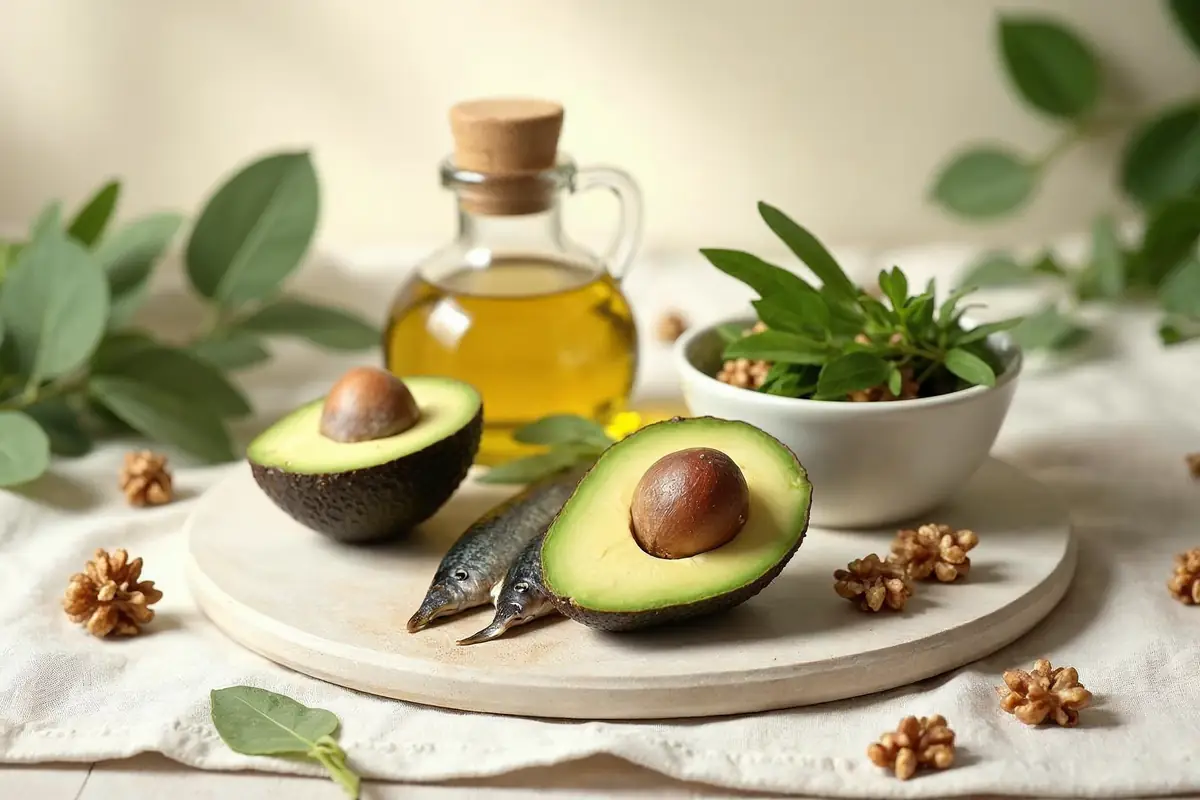
Healthy fats have a place in a weight loss plan, but in measured amounts, because every gram of fat carries about 9 kcal whatever its type. Olive oil is a better choice than butter for your heart, yet it is not any lighter.
A coach at the club looks closely at where you stand and offers the best guidance.
Book your free assessmentIn this article
The daily ceiling
The BHF page on saturated, unsaturated and trans fats sets out the UK advice. Fat should supply no more than about a third of your calories, which means a maximum of around 70g a day for a woman eating 2,000 kcal and 95g for a man eating 2,500 kcal. Saturated fat should stay below about 20g for women and 30g for men. When you eat less overall, those ceilings come down with it.
What a portion looks like
- Cooking oil. 1 teaspoon is 5ml and roughly 40 kcal. Measure it rather than pouring straight from the bottle.
- Nuts. A small handful of about 30g makes a filling snack.
- Avocado. Half a small fruit is a generous topping for toast.
- Seeds. 1 tablespoon over porridge or a salad adds crunch.
- Oily fish. UK advice is 2 portions of fish a week, one of them oily, such as salmon, mackerel or sardines.
Change the type, not the amount
The government Eatwell Guide asks us to choose unsaturated oils and spreads and to use them in small amounts. The gain comes from replacement rather than addition. Rapeseed oil instead of lard for roast potatoes, a lower fat spread instead of butter, walnuts instead of biscuits. Replacing saturated fats with unsaturated fats in the diet contributes to the maintenance of normal blood cholesterol levels.
Where fat hides
Pastry, sausage rolls, creamy sauces, cheese and biscuits usually carry more fat than the oil you cook with. A quick look at the label shows it, and our guide to macronutrients explained puts fat next to protein and carbs. For a week of meals, our page on daily calories for weight loss shows how these portions add up.
A simple week
Monday, oily fish with potatoes and greens. Thursday, white fish or chicken. A teaspoon of oil in the pan each evening. Nuts on 2 days of the week as a snack, seeds on breakfast, and butter kept for the weekend. Nothing is banned and everything is measured.
Seeing what changes in your body
The scales cannot tell you what you are losing. At Willerby Nutrition, the free assessment includes a body scan that measures muscle, fat and water, so you can follow more than a single number. A weekend walk along the Hessle foreshore completes the picture nicely. If you have high cholesterol or take heart medicine, speak to your GP before changing your diet, as this article is general information and not medical advice.
Your own weight loss curve
Type in your profile and the line redraws immediately.
At the middle pace, 8 kg comes off in about 11 weeks. At the gentlest pace you are looking at about 4 months.
The usual guide for weight loss that lasts is between 500 g and 1 kg per week, which forms the best band on the chart. Keep exceeding 1 kg per week and the body burns muscle nearly as much as fat. That is the striped band.
A rough projection only. Everyone follows their own path and results differ. Your device does the sums and nothing is stored or sent. At 65 or older, see your doctor first.
The way this curve is worked out
The zone tops out at 500 g every week, the gentlest pace, and bottoms out at 1 kg every week, the level where the risk starts.
Early weeks go quicker, largely because of water, and then things level off. After 40, the typical curve flattens gradually as metabolism slows. For similar effort, men tend to shed weight slightly sooner than women.
The journey curve includes flat spells lasting several days and slight regains, just like everyday life. It cannot tell you how yours will go.
These tips are general ones. They do not stand in for medical advice.
Further reading

For help from day to day, take a look at the healthy eating programme.